Atlanta's business districts are spread across a wide map, and that shapes your whole day. Downtown, Midtown, Buckhead and Perimeter Center each have their own office towers, hotels and meeting spaces, and they sit along a north–south line that follows the interstates and Peachtree Street. If your calendar has two or three meetings in different districts, the travel between them is the part that decides whether the day works.
This guide explains how the atlanta business districts connect, roughly how long each hop takes, where parking and drop-offs get awkward, and when a chauffeured car makes more sense than driving yourself. It is written for visiting executives, meeting planners and local teams who need reliable movement between offices, hotels and event venues.
How Atlanta's Business Districts Fit on the Map
Atlanta grew outward from Downtown, and the office market followed the highways north. That is why the city's main business districts form a rough line rather than a cluster. Downtown sits at the center near the Georgia World Congress Center, State Farm Arena and Mercedes-Benz Stadium. Midtown is just north of it, centered on Peachtree Street and the arts and tech offices around Technology Square and Colony Square.
Buckhead is further north, around Peachtree Road and Lenox Square, and it holds a dense mix of finance, consulting and law offices plus major hotels. Perimeter Center, in Dunwoody and Sandy Springs, is the northern cluster around Perimeter Mall and the Perimeter Center office towers near the I-285 and GA-400 interchange. Each district has its own rhythm, and each one changes how you plan a day of meetings.
For local context on specific areas, see our guides to Downtown Atlanta, Midtown, Buckhead and Dunwoody.
| From | To | Distance | Typical Off-Peak Time |
|---|---|---|---|
| Downtown | Midtown | About 2 miles | 10–15 minutes |
| Midtown | Buckhead | About 5 miles | 15–20 minutes |
| Buckhead | Perimeter Center | About 9 miles | 20–25 minutes |
| Downtown | Buckhead | About 7 miles | 20–30 minutes |
| Downtown | Perimeter Center | About 15 miles | 30–40 minutes |
| Midtown | Perimeter Center | About 12 miles | 25–35 minutes |
Traffic Patterns That Decide Your Schedule
Atlanta traffic is not a mystery, but it is easy to underestimate. The morning rush builds from the northern suburbs toward Midtown and Downtown, so southbound I-75 and I-85 slow first. In the afternoon the pattern reverses, and the northbound lanes toward Buckhead, Sandy Springs and Perimeter Center fill from about mid-afternoon into the evening.
Midtown and Downtown also absorb event traffic. A conference at the Georgia World Congress Center, a game at State Farm Arena or Mercedes-Benz Stadium, or a show at the Fox Theatre can turn a short hop into a long one. Check the venue calendar before you lock a meeting time, and give yourself a buffer if your route crosses the Downtown connector.
Surface streets have their own issues. Peachtree Street through Midtown and Buckhead carries heavy local traffic, and turning into tower garages can add several minutes on its own. A driver who knows the district will often use a parallel street instead of the main artery.
Morning rush: southbound I-75/I-85 into Midtown and Downtown is slowest from early to mid-morning.
Evening rush: northbound lanes toward Buckhead and Perimeter Center back up from mid-afternoon onward.
Event nights: Downtown and Midtown streets near arenas and theaters close or slow before and after events.
Rain: Atlanta drivers slow sharply in rain, so add time to any cross-district trip.
Friday afternoons: northbound traffic starts earlier as the work week ends.
Parking and Drop-Off Realities in Each District
Parking is the quiet cost of doing business in Atlanta. Downtown and Midtown garages fill early on weekdays, and hourly rates in tower garages are high. Buckhead is similar, with the added complication that many offices sit inside large mixed-use complexes where the garage entrance is not on the street you expect. Perimeter Center spreads across Dunwoody and Sandy Springs, so the address you were given may be in a different city than the one you typed into your map.
Drop-offs matter as much as parking. Large towers often have a main lobby entrance, a side entrance for the garage, and a separate entrance for the attached hotel. If your driver drops you at the wrong one, you can lose ten minutes walking through a concourse. Confirm the entrance with your host or the building's front desk before the trip.
For a smoother arrival, our chauffeur service in Atlanta handles curbside drop-offs and waits while you finish a meeting. If you are visiting several offices in one day, a point-to-point car service keeps you moving without hunting for parking at each stop.
Choosing the Right Vehicle for a Business Day
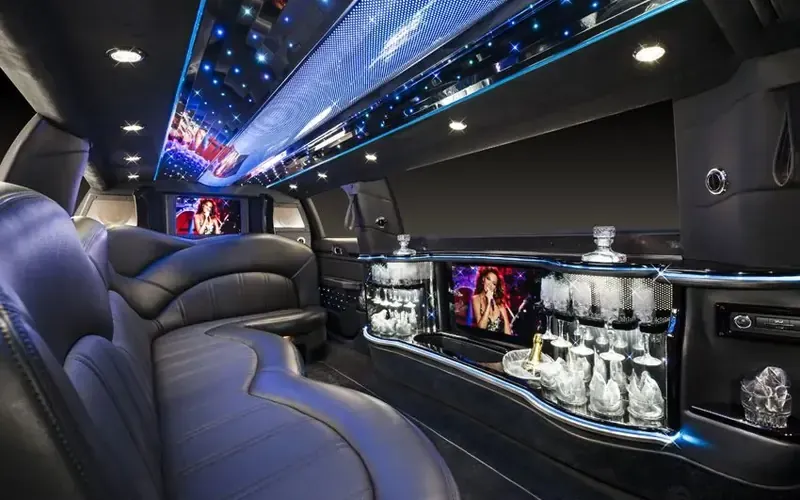
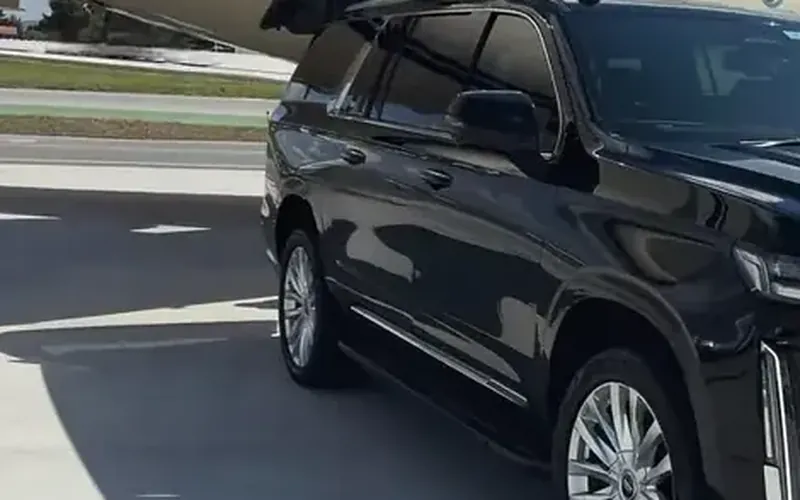
The vehicle should match the day, not the other way around. A single traveler heading to one meeting usually wants a sedan. Two or three colleagues traveling together fit comfortably in the same car, and a small group with luggage or presentation materials is better off in an SUV.
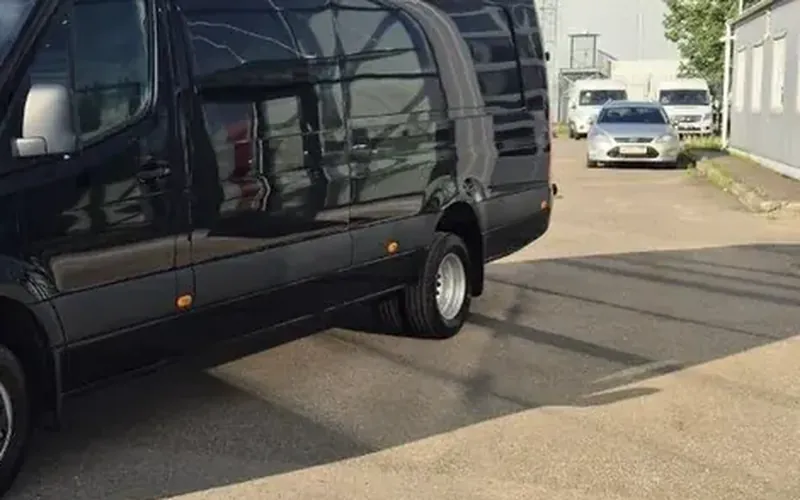
Larger teams and client visits call for more space. A Sprinter gives a group room to talk on the way and arrive together, which matters when you are hosting visitors from out of town. For a full comparison, look at our Luxury Sedan, Executive SUV and Mercedes Sprinter pages.
If your day includes a flight, a car to ATL Airport or a private jet and FBO transfer can be built into the same schedule. That way the vehicle waits while you finish your last meeting instead of you watching the clock.
When an hourly car beats point-to-point
If you have three or more stops across districts, an hourly vehicle is usually simpler than booking separate rides. The driver stays with you, holds your bags and adjusts when a meeting runs long. Point-to-point pricing works better for one clean trip, such as a hotel to a single office or a dinner reservation.
Meetings Across Districts: A Sample Day
A common visiting-executive day starts at a Downtown or Midtown hotel, moves to a Buckhead office mid-morning, then heads north to Perimeter Center for an afternoon session. On paper that is a short drive. In practice, each leg needs a buffer, and the return trip in the evening rush is the slowest part of the day.
Here is how a well-planned version of that day looks with a chauffeured car. The driver collects you at the hotel, drops you at the tower entrance, waits nearby, and moves you north before the worst of the traffic. You keep your laptop bag in the car instead of carrying it through three lobbies.
Planners coordinating several attendees can use a corporate shuttle to move a group between a hotel and a single venue, or a mini bus shuttle when the group is larger. For multi-stop executive days, our executive car service is built around exactly this kind of schedule.
Early morning: pickup at your hotel, first meeting in Downtown or Midtown.
Mid-morning: move north to Buckhead before the connector tightens.
Lunch: stay in Buckhead or continue to Perimeter Center depending on the calendar.
Afternoon: final meeting in Perimeter Center, with the driver holding nearby.
Evening: return south after the peak, or head straight to the airport for a flight.
Hotels and Landmarks That Anchor Each District
Knowing a few landmarks makes cross-district planning easier. Downtown centers on the Georgia World Congress Center, State Farm Arena, Mercedes-Benz Stadium and the hotels around Peachtree Center. Midtown revolves around Colony Square, Technology Square, the Woodruff Arts Center and the Fox Theatre. Buckhead is built around Lenox Square, Phipps Plaza and the office towers along Peachtree Road.
Perimeter Center is anchored by Perimeter Mall and the surrounding office towers near the GA-400 and I-285 interchange. Long-established hotels in each district handle a lot of corporate business, and they are used to arranging transport for guests. Ask the concierge about timing, but confirm your own pickup details with your car provider.
Check current hours, reservations and access rules directly with each hotel or venue, since these change with seasons and renovations. For event nights, our guides to State Farm Arena, Mercedes-Benz Stadium and the Fox Theatre explain how drop-offs usually work.
How to Build a Cross-District Itinerary That Holds Up
The best itineraries assume something will run late. Put your most important meeting first, when traffic is most predictable, and leave the flexible items for later. Group meetings by district where you can, so you are not crossing the city twice for the same client.
Share a written schedule with your driver or car provider in advance, including addresses, entrance notes and any hard deadlines. If a meeting is likely to run over, tell the driver so the vehicle stays available instead of releasing. Keep phone numbers for each host handy in case the building requires a lobby check-in.
Pricing for this kind of day is quoted per trip, based on the vehicle, the hours and the distance, with gratuity, tolls and fees listed separately. Request a written quote so you can compare it against the cost of parking, ride-hailing and lost time. Our corporate transportation team can build the schedule around your meetings.
What to confirm before the day
Confirm the pickup time, the exact entrance at each stop, whether the driver waits on site, and how overtime is handled. Ask for the chauffeur's contact details and a written confirmation of the itinerary. Small details like these are what keep a multi-district day on track.
When to Drive Yourself and When to Book a Car
Driving yourself makes sense for a single meeting with easy garage access and a schedule you control. It stops making sense when you have two or more districts on the calendar, when you are hosting clients, or when the day ends near an event that will clog the streets.
A chauffeured car earns its place when your time is worth more than the parking fee. You can take a call between meetings, review notes, or simply arrive without the stress of finding a garage. For visiting teams, it also removes the guesswork of navigating an unfamiliar city.
If you are planning a larger program, such as a conference, a roadshow or a client visit across several offices, our convention transportation and VIP transportation services cover group moves and priority schedules. Bookings can be made at any hour, and airport pickups are tracked to the flight.
Practical Tips for Visitors
A few habits make Atlanta business travel easier. Carry a light layer, because meeting rooms and garages run cold and the weather shifts. Keep your hotel address and each office address saved offline, since some tower lobbies have weak signal. Allow extra time on days with home games, concerts or a major convention downtown.
If you are arriving by air, plan your first transfer before you land. ATL is large, and the ride north to Buckhead or Perimeter Center is a real trip, not a quick hop. Our ATL airport car service tracks your flight and adjusts for delays, and our meet and greet service helps if you are unfamiliar with the terminal.
Finally, remember that this article is general planning information, not legal or tax advice. Confirm current parking, access and expense rules with the relevant venue, building management or your finance team.
Save addresses offline: tower lobbies and garages often have weak signal.
Note the entrance: main lobby, garage entrance and hotel entrance are often different doors.
Check event calendars: a Downtown game or convention changes drive times.
Book early on big weeks: major conventions tighten vehicle availability across the city.
Keep a buffer: 30 to 45 minutes between districts during rush hour is realistic.
Frequently asked questions
How long does it take to get between Downtown, Midtown, Buckhead and Perimeter Center?
Off-peak, Downtown to Midtown is usually about 10 to 15 minutes, Midtown to Buckhead about 15 to 20, and Buckhead to Perimeter Center about 20 to 25. During rush hour, double those estimates. Always add a buffer if your route crosses the Downtown connector or a major event is in town.
Is it better to drive or take a car service between Atlanta business districts?
For one meeting with easy garage access, driving yourself is fine. For two or more districts in a day, hosting clients, or a schedule with hard deadlines, a chauffeured car saves time and parking hassle. You can work between stops and arrive at the door.
Where do cars drop off at Buckhead and Perimeter Center offices?
Large towers often have separate entrances for the main lobby, the parking garage and any attached hotel. Confirm the correct entrance with your host or the building's front desk before the trip, and share it with your driver so you are not dropped at the wrong door.
Can I book one car for a full day of meetings across districts?
Yes. An hourly vehicle is usually the simplest option for multi-stop days. The driver stays with you, holds your bags and adjusts when a meeting runs long. Pricing is quoted per trip based on the vehicle, hours and distance, with gratuity, tolls and fees listed separately.
How early should I leave for a morning meeting in Midtown or Downtown?
If you are coming from Buckhead, Perimeter Center or the northern suburbs, leave earlier than the map suggests. Southbound traffic builds through the morning rush. A 30 to 45 minute buffer is realistic for a cross-district trip during peak hours.
Do you handle group transport for conferences and client visits?
Yes. We arrange corporate shuttles, mini bus transfers and multi-vehicle programs for conferences, roadshows and client visits across the business districts. Share your schedule and headcount in advance so the right vehicles are assigned.
What should I confirm before a cross-district business trip?
Confirm pickup times, exact entrances at each stop, whether the driver waits on site, and how overtime is handled. Ask for the chauffeur's contact details and a written itinerary. These details keep a multi-stop day on schedule.