Airline crew transportation is the ground link between an airport and wherever a crew sleeps, trains or reports next. At Hartsfield-Jackson and the Atlanta-area private airports, that usually means a scheduled pickup at a fixed time, a driver who knows the terminal or FBO curbside rules, and a vehicle that fits a full crew plus their roll-aboards.
This guide covers how crew transfers typically work, what makes a pickup reliable when a flight is delayed or a crew goes illegal on duty time, what to ask a provider before you sign, and how crews and airline coordinators can plan a booking in metro Atlanta.
How airline crew transportation usually works
Crew transport is a scheduled service, not a hail-and-ride. A coordinator, crew scheduler or hotel front desk books a vehicle for a specific time, and the driver is assigned in advance. The crew is met at a named door, the bags go in the back, and the ride ends at the hotel, the training center or the next airport.
Most rotations follow a predictable pattern. A crew lands, clears the airport, and rides to a crew hotel. Hours later the same crew is picked up for the return report time. Some carriers run a standing shuttle on a loop between the airport and a hotel; others book per trip because the schedule changes too often for a fixed loop.
In Atlanta, the split matters. Hartsfield-Jackson handles the airline traffic, while the reliever fields, PDK, Fulton County–Brown Field, Gwinnett–Briscoe, Cobb County–McCollum and Falcon Field, handle corporate, charter and private flying. Crews on a charter leg may never see the big terminal at all. Each location has its own curbside and gate rules, so a provider who works all of them saves you a phone call. If your crews mostly touch the main terminal, read the ATL airport car service details before you build a rotation around it.
Confirm the flight: the driver tracks the inbound flight so a delay moves the pickup automatically.
Meet at a named point: a specific door, sign or FBO lobby, not "outside baggage claim."
Load the bags: crew luggage is bulky; the vehicle type should be chosen for it, not just for headcount.
Run the route: the driver takes the most reliable route for the time of day, not necessarily the shortest.
Log the drop: the time and location are recorded so the carrier can reconcile the trip later.
What flight crews actually need after a long duty day
Ask any pilot or flight attendant what they want from a crew car and the answers are consistent: a driver who is already there, a quiet vehicle, working air conditioning and a smooth ride. After a transcon or a weather delay, nobody wants to explain their schedule twice or wait on a curb in the heat.
Reliability beats luxury here. A clean, comfortable black car with a professional chauffeur is the standard; a corporate chauffeur service style of booking, assigned driver, tracked flight, itemized quote, is what most crews actually experience.
Crews also care about a few practical details that rarely come up on a leisure booking.
On-time pickup: the driver should be waiting before the report time, not arriving at it.
Space for bags: a full crew with roller bags and crew kits needs real cargo room.
Discretion: no questions about routes, schedules or passengers; quiet is the default.
Direct routing: the fastest sensible way to the hotel, especially when rest time is short.
After-hours availability: late arrivals and early reports are normal, so the provider must dispatch at any hour.
A reachable dispatcher: someone who answers when a crew needs to change a pickup at the last minute.
Matching the vehicle to the crew and the bags
Crew size is only half the equation. Two pilots on a repositioning leg travel light and fit easily in a luxury sedan. A full cabin crew arriving for a multi-day rotation brings roller bags, crew kits and sometimes uniforms on hangers, and that changes the math.
The table below shows how the fleet generally lines up with common crew scenarios. Seat counts are typical, and the exact vehicle is confirmed on your quote, so state the headcount and bag count when you request it.
| Crew scenario | Usual vehicle | Why it fits |
|---|---|---|
| Two pilots, short reposition | Luxury Sedan | Fast, discreet, easy curbside at a private FBO |
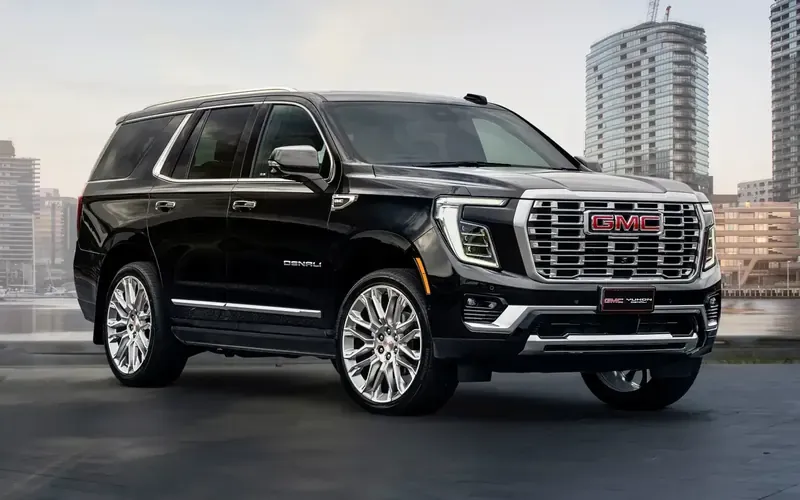
| Three to four crew with bags | Executive SUV | Cargo room for roller bags without a bigger vehicle |
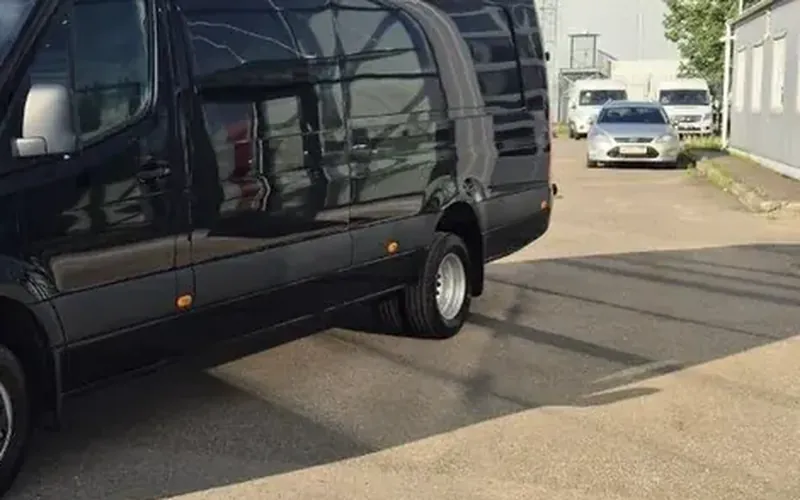
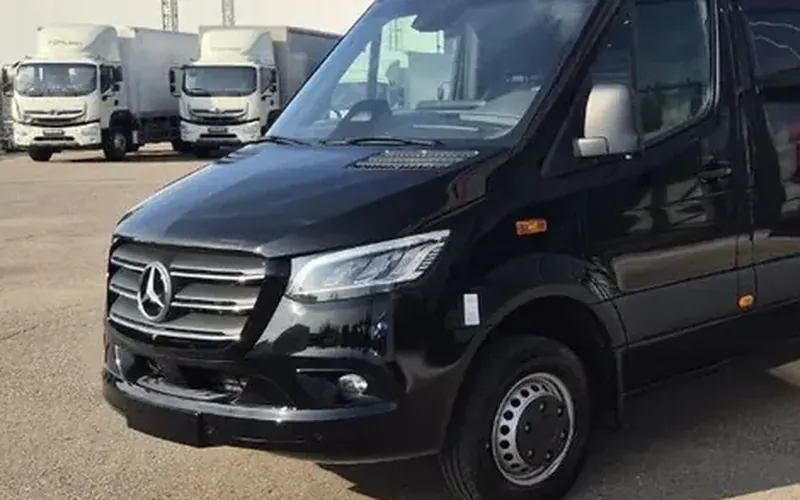
| Full cabin crew, one hotel | Mercedes Sprinter | Standing room, luggage space, one drop |
| Large crew or mixed carrier group | Mini Bus Shuttle | Seats a whole rotation with bags in the back |
| Standing hotel loop | Mini Bus Shuttle or Sprinter | Repeat runs on a fixed schedule |
| Charter crew at a reliever field | Executive SUV or Sprinter | Fits FBO gate and lot access |
Planning around ATL, delays and duty-time changes
Hartsfield-Jackson is one of the busiest airports in the world, and its cell lot, curbside rules and terminal layout reward drivers who work there daily. Crew pickups usually go more smoothly at a named door or a designated crew meeting point than at general rideshare pickup areas, which can be crowded and slow.
Delays are the norm, not the exception. A good provider tracks the inbound flight number and shifts the pickup automatically. The harder case is a crew that goes illegal on duty time or gets reassigned mid-rotation; the pickup time changes by hours, sometimes to the next morning. Ask before you book how those changes are handled and whether they carry a fee.
Private aviation crews have a different rhythm. A charter crew at a reliever field may need a quick run to a hotel near the field or a longer ride into Buckhead or Midtown for rest. A provider that works PDK airport pickups and the other metro fields can handle either without a handoff.
Build a buffer into the schedule. If a crew must report at a certain time, the pickup should be set so the ride lands with time to spare, not exactly at the door. Traffic on the downtown connector and the Perimeter can turn a short hop into a long one during rush hour.
What airlines and operators should ask before signing
Most carriers buy crew transport through a ground handler, a hotel contract or a direct account with a local provider. Whichever route you take, the questions are the same, and the answers tell you whether the service will hold up on a bad weather night.
Insurance and licensing come first. Ask for proof of commercial coverage and confirm the drivers are properly licensed for hire in Georgia. This is general information, not legal advice; confirm current requirements with the state authority that regulates for-hire vehicles.
Then move to operations.
Dispatch hours: can they take a booking and answer a phone at any hour?
Flight tracking: do they monitor inbound flights and adjust pickups automatically?
Change policy: what happens when a crew goes illegal, gets reassigned or cancels?
Driver assignment: is the same driver assigned to a standing rotation, or does it rotate?
Vehicle confirmation: is the exact vehicle confirmed in writing on the quote?
Billing: one invoice per rotation or per trip, with gratuity, tolls and fees itemized?
Reporting: can they provide pickup and drop times for reconciliation?
Why crew hotels and FBOs change the pickup plan
Crew hotels are usually chosen for proximity and contract rates, not for easy vehicle access. Some have a dedicated porte-cochère for shuttles; others have a narrow front drive where a mini bus cannot idle. Knowing which is which saves a crew from dragging bags down a block.
Hotels near the airport, in College Park, East Point and Hapeville, sit minutes from the terminals, which makes short-notice pickups realistic. Hotels in Buckhead, Midtown or Downtown add a real drive but put crews near restaurants and a change of scenery on a long layover. Hapeville in particular is close enough that a late arrival can still be in a bed quickly.
Private terminals have their own logistics. FBOs at PDK, FTY, LZU, RYY and FFC control who comes through the gate and where vehicles stage, so the driver needs the tail number or the FBO name, not just an address. Crews arriving on a charter often walk straight from the aircraft to a waiting SUV, which is faster than any terminal process, if the driver is cleared to the ramp-side lot.
Confirm the meeting point in writing on every booking: hotel entrance, terminal door, FBO lobby. It is the single most common source of a missed pickup.
How booking and pricing work for crew transport
Crew transport is quoted per trip or per rotation. The price depends on the vehicle, the distance, the time of day, the number of hours if you are holding a driver, and any minimums your account carries. Gratuity, tolls and fees should be listed separately so you can see what you are paying for.
You will get the cleanest quote if you provide the flight number, the crew size, the bag count, the pickup point and the drop address. If the schedule is still firming up, say so, a provider can quote a likely window and adjust once the rotation is confirmed.
For recurring hotel loops, ask whether a standing schedule is cheaper than individual trips and what happens on the days the loop is not needed. For one-off charters, a per-trip quote is usually simpler.
To compare providers, put the same scope in front of each one: same vehicle class, same hours, same pickup point. Then compare the itemized totals, not the headline number. A quote that excludes gratuity and tolls is not the same quote.
You can request a written quote for a single crew pickup or a full rotation and see the breakdown before you commit.
Common mistakes in crew ground transport
Most crew transport problems trace back to planning, not driving. The vehicle is too small for the bags, the meeting point is vague, or nobody told the provider the flight was delayed. Each is fixable with a better booking process.
Another frequent issue is treating crew transport like a leisure booking. Leisure riders accept a wait; a crew on a tight rest window does not. The provider should be built for scheduled, repeatable service with a dispatcher behind it.
Watch for these patterns.
Booking for headcount only: four crew with eight bags is not a sedan job.
Vague meeting points: "the airport" is not an address; name the door or the FBO.
No flight number: without it, the driver cannot track the arrival.
Assuming hotel shuttles cover crews: many hotel shuttles run on fixed loops and stop at night; confirm before relying on one.
Skipping the change policy: duty-time changes happen; know the rules before they do.
Choosing on price alone: the cheapest quote often excludes gratuity, tolls or after-hours dispatch.
Building a reliable crew transport routine
The carriers and operators who get this right tend to do the same things. They keep a short list of vetted providers, give them complete trip details, and review the pickup and drop logs periodically. They also keep a backup contact for the nights when the primary provider is stretched.
For a base in Atlanta, that usually means one provider who covers Hartsfield-Jackson and the reliever fields, can scale from a sedan to a mini bus, and dispatches around the clock. Crews notice the difference when the same driver shows up for the same rotation.
Start with your next rotation. Send the flight numbers, crew counts and hotel addresses, ask for an itemized quote, and confirm the meeting points in writing. That alone removes most of the friction from crew ground transport.
Frequently asked questions
What is airline crew transportation?
It is the scheduled ground service that moves flight crews between airports, crew hotels, training centers and report locations. Unlike a leisure car service, it is booked to fixed times and tied to flight numbers, and the provider is expected to adjust when the flight or the schedule changes.
How far in advance should a crew pickup be booked?
For a known rotation, booking days ahead gives the provider time to assign a driver and confirm the vehicle. Short-notice pickups are often possible near the airport, but availability depends on the day and the vehicle size, so call rather than assume.
Can one vehicle handle a full crew and their luggage?
Usually yes, if you match the vehicle to the bag count. A Mercedes Sprinter or mini bus handles a full cabin crew with roller bags; a sedan suits two pilots traveling light. State both headcount and bag count when you request the quote.
What happens if a flight is delayed or a crew goes illegal on duty time?
A provider that tracks the flight number will move the pickup automatically for a delay. Duty-time changes are different and can shift a pickup by hours, so ask about the change policy and any fees before you book.
Do crews get picked up at the terminal or somewhere else?
It depends on the airport and the operation. At Hartsfield-Jackson, crews are usually met at a named door or a designated crew meeting point. At private fields like PDK or FTY, the driver meets the crew at the FBO, sometimes at a ramp-side lot, so the FBO name or tail number is needed.
Is gratuity included in a crew transport quote?
It should be listed, either included or separate, along with tolls and fees. Ask for one itemized quote per trip or rotation so you can compare providers on the same scope rather than on a headline number.
Can a provider cover both the airline terminal and the private airports?
Many Atlanta providers do, but confirm it. Covering Hartsfield-Jackson plus PDK, FTY, LZU, RYY and FFC means one contact for every leg of a rotation and no handoffs between companies.