Film crew transportation georgia productions rely on works best when it is planned like any other part of the shooting schedule: a fixed list of people, a fixed set of movements, and one point of contact who owns it. Productions here move talent, department heads and background groups between airports, hotels, basecamp, stages and locations all day, often on short notice. A chauffeured service with a dispatcher who understands call sheets keeps that moving without pulling the production coordinator off the set.
This guide covers how film crew transportation georgia productions typically set up, which vehicles fit which job, how airport pickups work at Hartsfield-Jackson and the private fields, and what to put on a booking request so the quote comes back accurate. It is written for line producers, transportation captains, production coordinators and location managers who are building a transportation plan for a shoot in metro Atlanta or on location around the state.
How Film Crew Transportation Georgia Shoots Usually Work
Most Georgia productions do not need a fleet on standby all day. They need the right vehicle at the right time for a handful of recurring movements: early hotel-to-basecamp runs, basecamp-to-location transfers, airport pickups and drop-offs, and the late wrap ride home. The transportation captain or coordinator builds those movements from the call sheet the night before, then confirms them with the car service.
The pattern that works is a standing schedule plus on-call capacity. The standing part covers call times, company moves and airport arrivals you know about in advance. The on-call part covers the things that change: a scene running long, a cast member arriving a day early, a department that needs to move equipment across town. A chauffeured provider with dispatch coverage at any hour handles both without you renegotiating terms each time.
Productions shooting around Atlanta also deal with real traffic. The Downtown Connector, I-285 and Georgia 400 can turn a short hop into a long one, so build buffer into company moves rather than assuming a fixed drive time. A car service that runs these routes daily will usually quote realistic travel windows instead of optimistic ones.
For the corporate-style side of this, accounts, billing, recurring schedules, the setup overlaps closely with corporate transportation in Atlanta, and many productions use the same account structure.
Matching Vehicles to Cast, Crew and Gear
Vehicle choice on a production comes down to three things: how many people are moving, how much they are carrying, and whether the ride needs to feel premium. A department head heading to a location alone does not need a Sprinter. A camera team with cases does not fit comfortably in a sedan.
The list below is a practical starting point. Exact seat counts and luggage capacity are confirmed on the quote, so tell the provider what you are actually carrying.
Luxury Sedan: Up to 3 passengers. Best for talent, directors, producers and single department heads on airport runs or hotel-to-set moves.
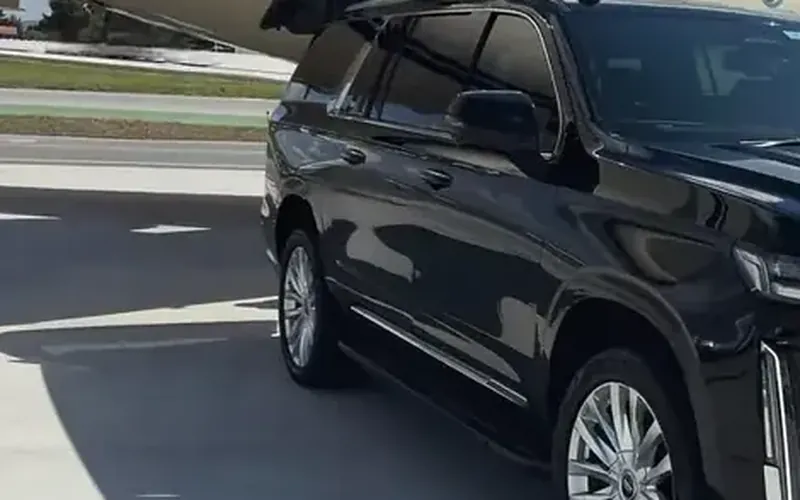
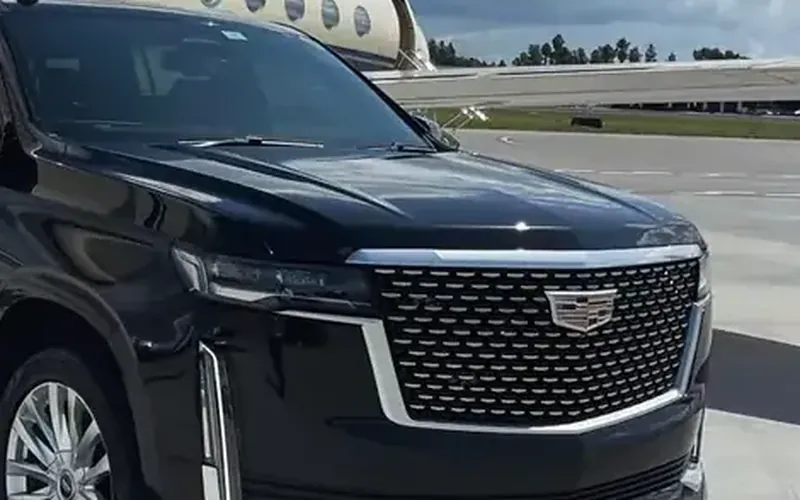
Executive SUV: Up to 6 passengers. Good for small teams traveling with luggage or a few equipment cases, and for family members visiting a shoot.
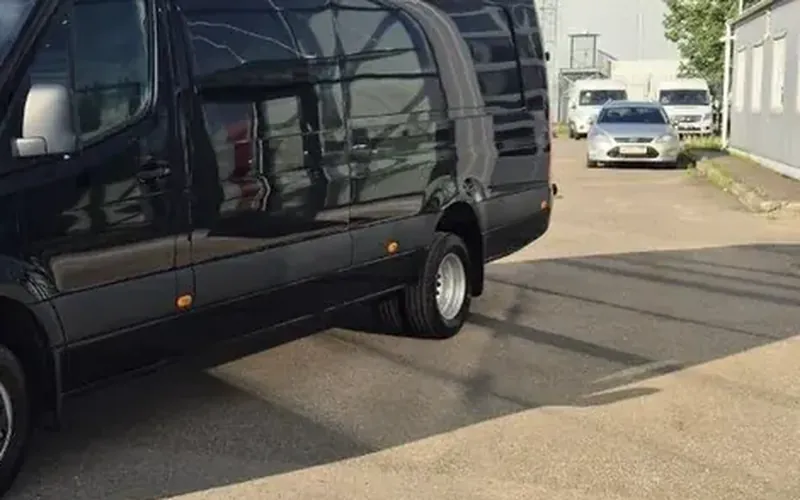
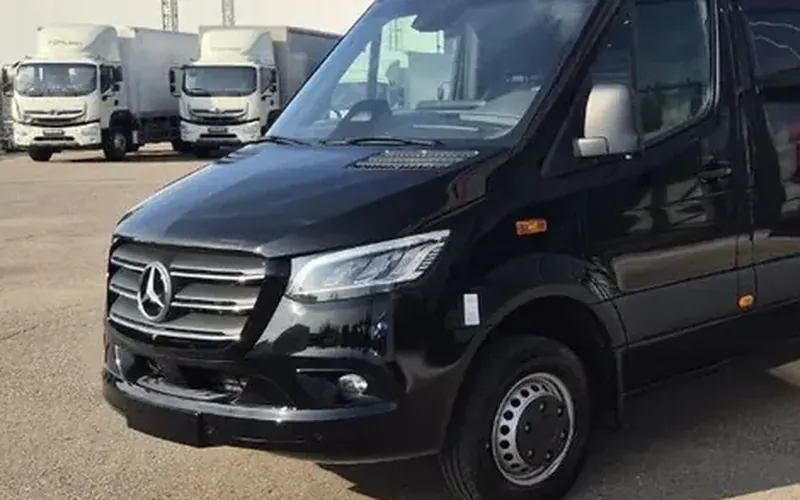
Mercedes Sprinter: 10 to 14 passengers. The workhorse for crew shuttles, airport group transfers and company moves where people travel together.
Mini Bus Shuttle: 20 to 30 passengers. Fits background groups, large crew calls and guest movements between hotels and basecamp.
Stretch Limousine or Stretch SUV Limousine: 8 to 18 passengers. Occasionally used for premieres, press events and wrap celebrations rather than daily transport.
Party Bus: 20 to 40 passengers. Reserved for wrap parties, cast events and celebrations, not for call-time shuttles.
If your shoot involves a premiere, a press day or a festival screening, the same vehicles that handle event transportation in Atlanta apply. For a single executive traveling ahead of the shoot, a black car service is usually the simplest booking.
Airport Pickups for Talent and Crew
Most out-of-state cast and crew arrive through Hartsfield-Jackson Atlanta International Airport, one of the busiest airports in the country. Arrivals there can be slow, and pickup logistics depend on which terminal and concourse the flight uses. Rather than guess, confirm the arrival details with the airline or the airport's official website before you build the pickup into the schedule.
The practical approach is to give the car service the flight number, not just a pickup time. Airport pickups are tracked to the flight, so a delay on the ground in Los Angeles or New York does not leave a chauffeur circling. Build in time for baggage claim, especially for crew traveling with equipment cases.
Some productions prefer to route talent through the private fields instead. DeKalb-Peachtree Airport (PDK) handles a lot of private aviation on the north side, and Fulton County–Brown Field (FTY), Gwinnett–Briscoe Field (LZU), Cobb County–McCollum Field (RYY) and Atlanta Regional–Falcon Field (FFC) serve smaller aircraft. Each has its own arrival pattern, and a PDK airport car service or an FFC airport car service booking is handled differently from a commercial terminal pickup.
Whichever airport you use, give the chauffeur a mobile number for the passenger or their assistant. Production offices are hard to reach at 6 a.m., and a direct contact solves most arrival problems in one call.
Planning Basecamp and Location Moves
Basecamp is where transportation plans usually break down. Crew arrives in waves, parking is tight, and the shuttle that was supposed to loop every twenty minutes gets stuck behind a grip truck. A few habits keep it manageable.
Set a fixed shuttle loop with published times and a visible pickup point. Crew will use a shuttle they can predict and will drive themselves if they cannot. Print the loop times on the call sheet or post them at basecamp.
Keep one vehicle on standby at basecamp during company moves. It absorbs the late arrivals, the forgotten case and the person who needs to leave early, and it costs far less than losing shooting time.
Confirm location access in advance. Some locations have narrow drives, weight limits or no room for a larger vehicle to turn around. Tell the provider what kind of vehicle can physically reach the set door, and whether cast will walk in from a drop point.
Coordinate parking with the location manager. Chauffeurs need somewhere legal to wait, and a vehicle circling a residential neighborhood is a complaint waiting to happen.
Productions that run several locations in a week often do better with an hourly chauffeur arrangement than with point-to-point trips, since the vehicle stays with the shoot. A chauffeur service booked by the hour covers waiting time without a new booking for every move.
A Sample Shoot-Day Transportation Schedule
The table below shows how a mid-size production day might be structured. Times are illustrative only; build yours from the actual call sheet.
The point is the shape, not the exact times: early staggered pickups, a predictable shuttle through the day, airport runs in the gaps, and a wrap plan that does not depend on one vehicle.
| Window | Movement | Typical Vehicle |
|---|---|---|
| Early morning | Hotel to basecamp, staggered by department | Executive SUV or Sprinter |
| Call time | Talent and director from hotel to set | Luxury Sedan |
| Mid-morning | Basecamp to location company move | Mercedes Sprinter |
| Midday | Airport pickup for incoming cast | Luxury Sedan or Executive SUV |
| Afternoon | Background group from holding to set | Mini Bus Shuttle |
| Evening | Location back to basecamp and hotels | Sprinter plus sedan |
| Wrap | Late rides home for key crew | Sedan or SUV on call |
What to Put on a Booking Request
The quality of the quote depends on the quality of the request. A car service can only price what it understands, and vague requests come back with wide ranges or get revised later. Send a written brief that covers the specifics.
Passenger count and luggage or equipment volume for each movement. Include cases, carts and anything oversized.
Dates, call times and the address of every pickup and drop-off, including gate codes and which entrance to use at a studio or location.
Whether the vehicle waits on site or returns. Waiting time is usually billed, so be explicit.
Flight numbers for any airport movement, plus a passenger mobile number.
Who is authorized to change the schedule on the day, and who approves added trips.
Any special requirements: child seats, accessibility needs, privacy expectations for talent, or a preference for a particular vehicle class.
Ask for one flat, itemized quote per trip or per hour, with gratuity, tolls, parking and fees listed separately. That makes two quotes comparable and avoids surprises at invoice time. If your production needs a longer-term arrangement, the account setup described for corporate transportation applies to film work as well.
Productions moving large groups between hotels and set can also use a group transportation plan, which handles multiple vehicles on one schedule.
Wrap Nights, Premieres and Cast Events
Not every production movement is a call-time shuttle. Wrap parties, premieres, press days and cast dinners need vehicles that suit the occasion and a schedule that does not leave people stranded at midnight.
For premieres and screenings, plan arrivals and departures as separate movements. Guests arrive over a window, but they leave in a cluster, and one vehicle per group is not enough. Book return capacity for the busiest half hour.
For wrap parties, a larger vehicle keeps a group together and removes the question of who is driving. A party bus or a stretch SUV limousine works for a cast and crew celebration; a fleet of sedans works better when the group is dispersed across hotels.
For cast dinners and press events around Buckhead, Midtown or Downtown, a sedan or SUV on standby for the evening is usually the simplest arrangement. The driver waits, the schedule flexes, and no one is hunting for parking.
If the event involves alcohol, remember that rules on service and consumption are set by the venue and by state and local authorities. This is general information, not legal advice; confirm current rules with the venue and the responsible authority.
Budgeting Crew Transportation Without Guesswork
Transportation is a line item that is easy to underestimate and easy to overpay for. The drivers of cost are straightforward once you know what to ask about.
Vehicle class and size drive the base rate. A sedan and a mini bus are different categories of cost, and a larger vehicle is not always the cheaper way to move a group if two smaller ones would do.
Hours and minimums matter more than distance on short local moves. Many services have hourly minimums, so a twenty-minute trip may bill at the minimum. Ask what the minimum is before you build a schedule around short hops.
Date and demand affect availability. Award season, major sporting events and convention weeks tighten supply around Atlanta, so book early for anything fixed.
Waiting time, parking, tolls and gratuity are usually separate line items. Ask for them to be listed, not bundled.
Distance matters for out-of-town locations. Shoots in Savannah, Augusta, Macon or the mountains involve drive time and possibly overnight arrangements for the chauffeur.
The most reliable way to compare is to request a written quote for the same schedule from each provider and read the line items, not just the total. Pricing is quoted per trip, so a quote built on your actual call sheet will be far more useful than a rate card.
Working With a Chauffeur Provider on Set
A car service that has worked productions behaves differently from one that has not. Chauffeurs understand that a call time can move, that talent may need discretion, and that the coordinator is the only person who should be changing the schedule.
Brief your chauffeurs the way you brief crew. Give them the day's movements, the pickup points, the contact name, and the rule on schedule changes. A short written brief at the start of the shoot prevents most confusion.
Keep one transportation contact per shoot day. When three people call dispatch with different instructions, vehicles end up in the wrong place.
Expect discretion around talent. Chauffeurs should not be posting locations or passengers, and the provider should understand that. Say so up front if privacy is a concern.
Have a backup plan for late wraps. A vehicle on call for the last two hours of the day is cheaper than a stranded key crew member at 2 a.m.
Finally, review the invoice against the brief. If added trips were approved, they should be documented. A provider that itemizes clearly makes that a five-minute check rather than an argument.
Locations Beyond Metro Atlanta
Georgia's production footprint extends well past the perimeter. Shoots run in Savannah, Augusta, Macon, Columbus, the North Georgia mountains and small towns in between, and each of those adds transportation planning.
For a distant location, decide early whether the vehicle stays. A crew shuttle that drives two hours out and two hours back is a different booking from one that stays overnight with the shoot. Ask how overnight chauffeur time is handled.
For long-distance moves, a long-distance car service to Augusta and Macon is often simpler than flying a small group, especially when equipment travels with them.
For locations near the northern suburbs, pickups from Alpharetta, Roswell, Sandy Springs and Marietta are routine and usually priced the same as any other metro pickup.
Confirm the return plan before the shoot day. The last thing a location manager needs at the end of a long day is to discover that the only vehicle on site was booked one-way.
Frequently asked questions
How far in advance should a production book crew transportation?
For a scheduled shoot, send the transportation brief as soon as the call sheet structure is set, ideally a week or more ahead for daily movements. Airport pickups and anything fixed should be booked as soon as flights are confirmed. Short-notice requests are often possible, especially for sedans and SUVs, but larger vehicles and multi-vehicle days are harder to fill at the last minute.
Can one provider handle both airport pickups and daily basecamp shuttles?
Yes, and it usually works better that way. One provider means one dispatch contact, one invoice and one set of instructions. Give them the full picture: arrival flights, call times, company moves and wrap plans. They can then assign vehicles across the day instead of treating each movement as a separate booking.
Do chauffeurs wait on set during a shoot day?
They can. Waiting time is typically billed, so decide per movement whether the vehicle stays or returns. For talent, department heads and company moves, keeping the vehicle on site is often worth it. For a quick drop-off, releasing the vehicle and calling it back is cheaper.
What is the best way to move a large background group?
A mini bus shuttle or a Sprinter, depending on the group size and how much they are carrying. Publish a fixed loop with times and a visible pickup point so people know when the next vehicle leaves. For groups over thirty, plan multiple vehicles on a staggered schedule rather than one large one.
Can transportation be arranged for a premiere or wrap party?
Yes. Premieres and wrap parties usually need arrival capacity over a window and return capacity in a cluster at the end. Book both directions and match the vehicle to the occasion: sedans and SUVs for dispersed guests, larger vehicles when the group travels together.
How are tolls, parking and gratuity handled?
Ask for them to be listed as separate line items on the quote. That way you can see what is included and compare quotes on the same basis. Confirm in advance how parking at studios and locations is billed, since those costs vary by site.
Does a production need a formal account?
Not always, but it helps on longer shoots. An account with a named contact, agreed billing and a documented approval process for added trips saves time at invoice review. Ask what the provider needs to set one up before the first shoot day.