A corporate car service account lets your company book chauffeured rides for employees and guests without paying per trip by card, and without every traveler setting up their own booking. You open one account, add authorized riders and bookers, and the provider bills the company on an agreed schedule with a record of every ride.
The cost side is simpler than it looks. Each trip is quoted as one flat, itemized price before the ride, with gratuity, tolls and fees listed separately. What changes the total is the vehicle, the hours, the distance and the date. This guide covers how accounts are set up, how booking and billing usually work, and what drives the numbers so you can compare quotes on equal terms.
What a Corporate Car Service Account Actually Is
A corporate car service account is a standing business relationship with a chauffeured transportation provider. Instead of each employee booking and expensing rides, the company holds one account with authorized users, agreed service standards and a single billing arrangement. Every ride is tied to the company, not to an individual's personal profile.
In practice this means your office manager, executive assistant or travel coordinator can book for anyone on the approved list. Riders show up, give a name, and get in. The provider tracks the trip, the vehicle and the chauffeur, and the charge lands on the company invoice with a reference you can match to a project, department or cost center.
Accounts are most useful for companies that book rides regularly: weekly airport runs, client visits, candidate interviews, conference shuttles or late-night rides home after events. If you book once a quarter, a one-off booking works fine. If you book several times a month, an account removes friction and gives you a paper trail.
Authorized bookers: the assistants or coordinators allowed to request rides.
Rider profiles: employees and guests who can travel on the account, with pickup preferences saved.
Billing contact: the person who receives invoices and approves payment.
Service preferences: default vehicle classes, airport meet-and-greet, quiet-ride settings.
Reporting needs: how you want charges labeled, by department, project or traveler.
How Account Setup Works
Setup is usually a short conversation plus a form. You give the provider your company details, the names and emails of people who can book, the names of people who can ride, and a billing contact. You also agree on how charges should be labeled so your finance team can code them without chasing receipts.
Most providers will confirm the account in writing, including the service standards you can expect: how far ahead to book, how flight tracking works at the airport, what happens if a flight is delayed, and how cancellations are handled. Read that document. It is where the practical rules live.
Once the account is open, booking is usually a phone call, an email or an online request, at any hour. For companies that need regular executive travel, a dedicated corporate transportation program can include standing weekly rides, saved addresses and named chauffeurs for frequent flyers.
What to have ready before you call
Company legal name and billing address, the names and contact details of authorized bookers, a list of riders or a rule for who qualifies, your default vehicle preferences, and any cost-center or purchase-order format your finance team requires. Having this ready turns setup into one conversation instead of three.
Approval rules worth agreeing on early
Decide who can book which vehicle class and whether anyone can book without a second approval. A simple written rule, such as sedans for solo travel and SUVs for groups with luggage, prevents surprise charges and awkward conversations at month end.
Booking Rides on the Account
Day to day, booking on a corporate account looks like any other reservation, minus the payment step. The booker gives the pickup time, the addresses, the passenger count, the luggage and any special requests. The provider confirms the vehicle class and the flat quote, and the ride is scheduled.
Airport trips are where accounts earn their keep. A chauffeur account tracks the flight, so a delayed arrival does not mean a missed pickup or a stranded traveler. For Atlanta Hartsfield-Jackson, that flight tracking matters because the airport runs on a busy schedule and delays ripple. Riders arriving at the domestic terminal or the international side can be met inside or outside depending on your preference.
For private aviation, the same account works at PDK, Fulton County–Brown Field, Gwinnett–Briscoe Field, Cobb County–McCollum Field and Atlanta Regional–Falcon Field. Small-airport pickups are often faster because there is no terminal walk, which matters when an executive is going straight into a meeting.
Same-day and after-hours requests
Most providers accept bookings at any hour, but same-day requests depend on vehicle availability. If your company regularly needs short-notice rides, say so during setup and agree on a response time for urgent requests.
Changes and cancellations
Ask what the cutoff is for changing a pickup and what a late cancellation costs. These terms belong in your account agreement, not in a phone call the night before.
Billing, Invoicing and Expense Reporting
Corporate accounts are usually billed on a cycle, weekly or monthly, with one invoice covering all trips in the period. Each line should show the date, the rider, the route, the vehicle, the base rate, gratuity, tolls and any fees. If the invoice is itemized, your finance team can code it without asking anyone what a charge was for.
The best accounts give you a reference number per trip. That single field lets you match a ride to a client meeting, a job candidate or a conference, which is what most expense reviews actually need. Ask to see a sample invoice before you sign up so you know what you will be reconciling.
Some companies prefer a corporate card on file per trip instead of a monthly invoice. Both work. The invoice model suits companies that want one payment and one report; the card model suits companies that want charges to hit a department card immediately. Choose based on how your finance team already operates.
| Payment method | Best for | What to confirm |
|---|---|---|
| Monthly invoice | Companies booking several rides a week | Itemized lines, trip references, payment terms |
| Weekly invoice | High-volume travel or event seasons | Cutoff day and how mid-cycle changes appear |
| Corporate card per trip | Department-level budgets | Whether receipts are emailed automatically |
| Direct bill with cost centers | Multiple offices or projects | How charges are labeled on the invoice |
What Drives the Cost of Each Trip
Pricing is quoted per trip, not published as a rate card, because the inputs change. The quote you get should be flat and itemized: a base rate for the trip, gratuity, tolls and any fees, each on its own line. That structure makes quotes comparable and makes invoices easy to audit.
The biggest cost driver is the vehicle class. A sedan for one traveler costs less than an SUV for a team with luggage, and a Sprinter or mini bus for a group costs more again. The second driver is time. Hourly service, waiting time and multi-stop days add up differently than a simple point-to-point ride.
Distance and date matter too. A run from a downtown office to a Buckhead client is short; a ride to Augusta or Macon is a long-distance trip priced accordingly. Weekday mornings, event nights and busy convention weeks carry different demand than a quiet Tuesday afternoon. Ask for a written quote with the vehicle, hours and inclusions spelled out.
Vehicle class: sedan, SUV, stretch limousine, stretch SUV, Sprinter, mini bus or party bus.
Hours: point-to-point trips versus hourly chauffeur service with waiting time.
Distance: local metro runs versus long-distance trips such as Augusta or Macon.
Date and time: weekday rush hours, event nights and convention weeks.
Minimums: some vehicles or time slots carry a minimum booking.
Gratuity and fees: shown separately so you see exactly what you are paying.
Choosing the Right Vehicle for Business Travel
Matching the vehicle to the trip is the easiest way to control cost without cutting service. A solo executive going to a meeting does not need a Sprinter; a team of six with golf bags does not fit in a sedan. Getting this right at booking saves a change fee and an awkward repack at the curb.
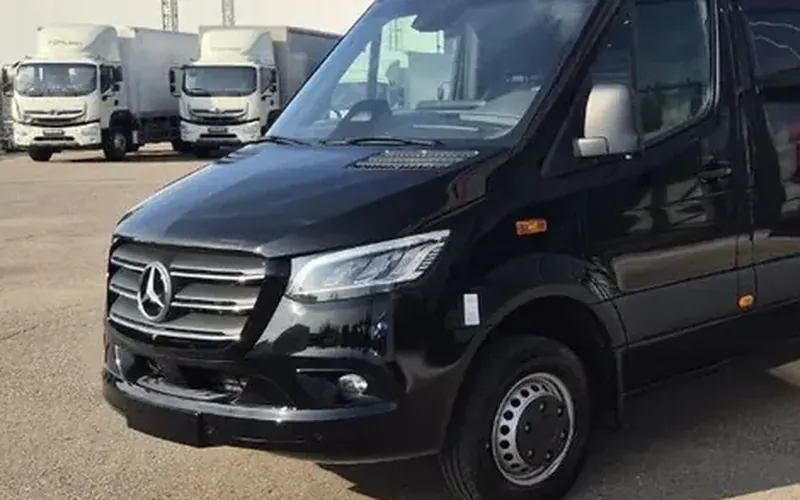
For most business travel, the luxury sedan handles airport runs and client meetings. The executive SUV covers families with luggage and small executive groups. When a group lands together, the Mercedes Sprinter carries up to about 14 passengers and keeps the team together instead of splitting across cars.
For conference shuttles and wedding-style guest movements, the mini bus shuttle handles larger groups on a loop. If your company runs recruiting events or client entertainment, a larger vehicle booked hourly often costs less than several separate sedans making the same trip.
When hourly service beats point-to-point
If a traveler has three meetings across Midtown, Buckhead and Sandy Springs in one afternoon, an hourly chauffeur who waits between stops is usually simpler than three separate bookings. You pay for the block of time, not for each leg.
When a shared ride makes sense
Two colleagues leaving the same office for the same airport at the same time should share an SUV. It costs less than two sedans and keeps arrival times aligned.
Service Standards to Write Into the Account
A corporate account is only as good as the standards behind it. Every booking should come with a professional chauffeur, a confirmed vehicle and a flat quote issued before the ride. Those three things are the baseline, and they should be in writing.
Airport service deserves its own line in the agreement. Flights are tracked, so pickups adjust to delays. Riders should know whether they will be met inside the terminal or at the curb, and how to reach the chauffeur if plans change. For companies with frequent flyers, a consistent meet-and-greet routine removes a small but repeated source of stress.
For companies moving people around the city, the black car service model fits the standard: professional chauffeur, clean vehicle, flat quoted price. If your account covers events, conferences or campus recruiting, add group transportation to the scope so larger moves are planned rather than improvised.
Dress, discretion and conduct
Most corporate riders expect a professional appearance and a quiet ride. If your executives prefer not to chat, say so at setup and the preference can be noted on the profile.
Data and privacy
Ask how rider names, addresses and travel patterns are stored and who can see them. This matters for companies with sensitive client lists or executive protection needs.
Common Corporate Use Cases
Accounts tend to grow from one use case into several. The first is usually airport travel: executives, visiting clients and job candidates flying into Hartsfield-Jackson. Flight tracking and a flat quote make this the easiest place to start, and it is often where the savings in time and hassle show up first.
The second is client entertainment. A ride to a Braves game at Truist Park, a Falcons or Atlanta United match at Mercedes-Benz Stadium, or a concert downtown keeps the group together and removes parking from the evening. For companies that host clients regularly, the event transportation option covers drop-off, pickup and waiting.
The third is recruiting and campus travel. Moving candidates between the airport, a hotel and an office, or moving students and staff around Atlanta's universities, is repetitive work that an account handles cleanly. The same logic applies to conferences, offsites and brewery or wine tours used as team events.
Airport transfers: executives, clients and candidates arriving at ATL or the private airports.
Client entertainment: games, concerts and dinners where parking would slow the group down.
Recruiting: candidate pickups, campus visits and interview-day logistics.
Conferences and offsites: group shuttles between hotels and venues.
Late-night rides home: safe transport after company events.
Long-distance trips: Augusta, Macon and other out-of-town business travel.
Comparing Quotes Between Providers
When you compare providers, compare like with like. Ask each one for a written quote on the same three or four sample trips: a solo airport run, a team airport run with luggage, a four-hour hourly booking and a group shuttle. Then compare what is included, not just the headline number.
Check whether gratuity, tolls and fees are separate line items or folded in. Check what happens with waiting time, flight delays and cancellations. Check whether the quote holds if the flight lands late. A quote that looks lower but excludes gratuity and tolls is not actually lower.
Ask for a sample invoice and a named contact for account issues. A provider that answers questions in writing before you sign is usually the one that answers them after. When you are ready, request a written quote for your sample trips and let the numbers speak.
| What to check | Why it matters |
|---|---|
| Quote format | Flat, itemized quotes are easier to audit than bundled totals |
| Gratuity and fees | Separate lines show the real cost of the trip |
| Flight tracking | Delayed arrivals should not create new charges or missed pickups |
| Cancellation terms | Clear cutoffs prevent disputes |
| Invoice detail | Trip references and cost centers speed up expense review |
| Vehicle confirmation | The exact vehicle should be named on the quote |
Getting Your Account Started
Start with a short list of the trips your company actually makes in a typical month. Most companies find that two or three routes cover the majority of rides: an airport run, a client meeting route and an event night. Give those to a provider and ask for a written quote and an outline of how the account would work.
Then run a trial period. Book a handful of rides through the account before you move all your travel onto it. Watch how the quotes come back, how the invoices read and how the chauffeur handles a delayed flight. That short trial tells you more than any sales conversation.
If your company is based in or travels through metro Atlanta, the corporate transportation service covers airport pickups, hourly chauffeur service, group moves and long-distance trips on one account. Ask for the quote in writing, with gratuity, tolls and fees listed separately, and compare it against your current setup.
A simple rollout plan
Open the account with one booker and a small rider list, run a few trips, review the first invoice together, then expand the rider list and add standing bookings. Rolling out in stages keeps the first month clean and gives you real data before you commit to a bigger program.
Frequently asked questions
How does a corporate car service account work?
Your company opens one account with a chauffeured transportation provider, names the people who can book and ride, and agrees on billing and service terms. Bookers request rides by phone, email or online at any hour, and the company is billed on an agreed cycle with an itemized record of each trip.
How is each trip priced?
Each trip is quoted as one flat, itemized price before the ride. The quote lists the base rate plus gratuity, tolls and any fees separately. The total depends on the vehicle class, the hours, the distance and the date, and some vehicles or time slots carry minimums.
Can we get monthly invoicing instead of paying per trip?
Yes. Most corporate accounts are billed weekly or monthly with one invoice covering all trips in the period. Ask to see a sample invoice during setup so you know how charges will be labeled and whether trip references are included for expense coding.
What happens if a flight is delayed?
Airport pickups are tracked to the flight, so the chauffeur adjusts to the actual arrival time. Confirm the provider's policy on waiting time and delay charges in writing when you set up the account, since terms vary between providers.
Can we set rules for which vehicle employees can book?
Yes, and you should. A simple written rule, such as sedans for solo travel and SUVs for groups with luggage, prevents surprise charges and keeps costs predictable. Most providers will note the rule on the account so bookers see it at the point of booking.
Do accounts cover private airports and long-distance trips?
They can. Accounts typically cover Hartsfield-Jackson as well as the metro private airports, and long-distance trips such as Augusta or Macon can be booked on the same account. Confirm coverage and pricing for out-of-town trips when you request your quote.
Is this information legal or tax advice?
No. This is general information about how these accounts work. Rules on deducting business transportation expenses are set by tax authorities and can change, so confirm current rules with a qualified tax professional before relying on them.