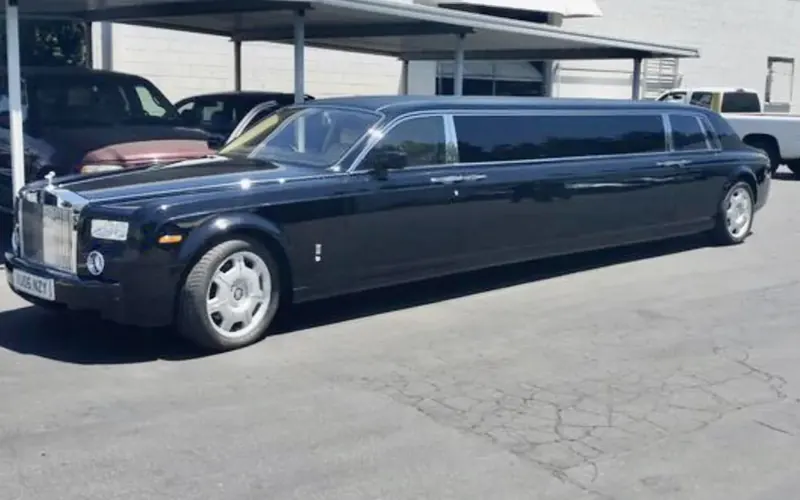
If you are booking a limo for prom, a wedding or a night out, you may be wondering: are limos inspected in Georgia? The short answer is yes. Under the Georgia Limousine Carrier Act, a limousine carrier must have each vehicle it owns or operates inspected for safety and mechanical condition at least once a year.
That requirement is set out in O.C.G.A. 40-1-154, part of the Limousine Carrier Act found at O.C.G.A. 40-1-150 through 40-1-170. The Georgia Department of Public Safety Motor Carrier Compliance Division handles carrier oversight and publishes a limousine FAQ that explains the rules in plain language. This guide walks through what a safety inspection generally covers, what the law asks of carriers, and how to confirm a company is doing its part before you put down a deposit.
What Georgia Law Says About Limo Inspections
Georgia does not leave limousine safety entirely to the companies themselves. The Georgia Limousine Carrier Act, codified at O.C.G.A. 40-1-150 through 40-1-170, sets the ground rules for limousine carriers operating in the state. The inspection requirement lives in O.C.G.A. 40-1-154.
In plain terms, the statute requires that every vehicle a limousine carrier owns or operates be inspected for safety and mechanical condition at least once a year. That covers the whole fleet a carrier puts on the road, not just the newest or most visible vehicles.
The Georgia Department of Public Safety Motor Carrier Compliance Division is the agency that handles carrier compliance and enforcement. Its limousine FAQ is a useful plain-language companion to the statute if you want to read the rules yourself.
One thing to keep in mind: the law sets a minimum. A company can inspect more often than once a year, and many do as part of routine maintenance. The annual requirement is the baseline you can expect every licensed carrier to meet.
What a Limo Safety Inspection Usually Covers
A safety and mechanical inspection is not a cosmetic check. It looks at the parts of the vehicle that affect whether it can carry passengers safely. The exact checklist is set by the state, but the categories below are the ones that matter most to riders.
If you are renting a stretch limousine or a stretch SUV limousine for a big group, the mechanical side matters even more, since a heavier vehicle with a full passenger load puts more demand on brakes and suspension.
Brakes and suspension: Stopping power, brake lines, pads and rotors, plus shocks and springs that keep a long vehicle stable.
Tires and wheels: Tread depth, tire condition, lug nuts and wheel integrity, a common failure point on stretched vehicles.
Lights and signals: Headlights, brake lights, turn signals and interior lighting that passengers rely on at night.
Steering and drivetrain: Steering components, belts, hoses and fluid levels that affect control and reliability.
Safety equipment: Seat belts where required, fire extinguisher, first aid kit and emergency exits on larger vehicles.
Body and structure: Frame integrity and the condition of any stretched section, doors, steps and handrails.
Who Oversees Limousine Carriers in Georgia
The Georgia Department of Public Safety Motor Carrier Compliance Division is the enforcement side of the Limousine Carrier Act. Carriers that operate for hire in Georgia are expected to hold the proper authority and to keep their vehicles in compliance with the inspection requirement.
The Department publishes a limousine FAQ aimed at both carriers and the public. It is worth a look if you want to understand what the state expects, especially before a high-stakes booking like a wedding or a school event.
Enforcement works best when customers ask questions. A carrier that knows riders check credentials has a strong reason to stay current on inspections and paperwork. That is one reason it pays to book with a company that answers these questions without hesitation.
Are Limos Inspected in Georgia? How to Ask for Proof
You do not need to be an expert to verify a limo company. You just need to ask a few direct questions before you sign and pay a deposit. A reputable operator will answer them clearly and without stalling.
For prom in particular, parents are often the ones booking and the ones who will not be in the vehicle. That makes verification more important, not less. The same applies to a wedding limo service, where the vehicle is part of a tightly scheduled day and a breakdown is not an option.
Ask early. Once you are inside the final weeks before an event, companies are busy and paperwork requests can slow down. Start the conversation when you request your quote.
Ask about the annual inspection: Confirm that every vehicle in the fleet is inspected at least once a year as O.C.G.A. 40-1-154 requires, and ask when the vehicle assigned to your trip was last inspected.
Ask for operating authority: A legitimate carrier should be able to confirm it is authorized to operate in Georgia.
Ask which vehicle you are getting: Request the specific vehicle type and year, not just a category. Confirm it on your written quote.
Ask about driver screening: Inquire how chauffeurs are vetted, including license checks and background screening.
Ask about insurance: Confirm the carrier carries commercial coverage for passenger transport.
Get it in writing: Ask for the vehicle confirmation and key details in your quote so there is a record.
Inspection Rules vs. What a Good Operator Does Anyway
Meeting the annual inspection requirement is the legal minimum. The difference between an adequate operator and a strong one usually shows up in what happens between inspections.
Daily and pre-trip checks are where small problems get caught. A chauffeur who walks the vehicle before every pickup, checks lights and tires, and reports anything unusual is doing the kind of work that prevents surprises on the road.
Routine maintenance matters too. Brakes, tires and fluids wear faster on vehicles that run airport trips and long event nights. A company that services on a schedule rather than waiting for something to break is protecting your trip.
When you compare quotes, remember that these habits cost money to maintain. That is part of why a written, itemized quote from a professional operator looks different from the cheapest number you can find. It reflects a vehicle that is actually maintained and a chauffeur who is actually trained.
Why This Matters More for Prom and Weddings
Any limo ride deserves a safe vehicle. Some rides just carry more weight, literally and figuratively.
Prom is the classic case. Groups of teenagers, often late at night, often in a vehicle packed to capacity. Parents booking the ride are not there to see the tires or the brake lights. The prom limo service you choose should be one you have vetted, not one a friend of a friend recommended without checking.
Weddings bring their own pressure. The timeline is fixed, the photos are permanent and the whole day depends on vehicles showing up on time and running properly. A limo that fails on the way to the ceremony is not a small inconvenience.
Large-group vehicles deserve extra attention. A party bus carrying a full load of passengers puts real demand on brakes and suspension, which is exactly what the inspection is meant to catch.
For both prom and weddings, ask the same questions you would ask about any high-stakes booking, and ask them early enough to change plans if the answers are vague.
Other Things to Confirm Before You Book
Inspection compliance is the headline, but it is not the only thing worth checking. A few more details separate a smooth booking from a stressful one.
Licensing and insurance are the two big ones. The state handles carrier authority; the company should be able to confirm its coverage. If a quote seems unusually low, ask what is included and whether gratuity, tolls and fees are listed separately.
Then there is the practical side: what happens if a flight is delayed, how the chauffeur handles a schedule change, and who you call the day of the event. These are the details that decide whether the night goes smoothly.
| What to check | Why it matters | How to confirm |
|---|---|---|
| Annual safety inspection | Required by O.C.G.A. 40-1-154 for every vehicle a carrier operates | Ask when the assigned vehicle was last inspected |
| Operating authority | Confirms the carrier is authorized to operate in Georgia | Ask the company directly; check the DPS Motor Carrier Compliance Division limousine FAQ |
| Insurance | Covers passengers if something goes wrong | Ask for confirmation of commercial coverage |
| Driver screening | The chauffeur matters as much as the vehicle | Ask how drivers are vetted and trained |
| Vehicle confirmation | You get the vehicle you planned for | Ask for the specific vehicle type on your written quote |
| Written quote | Protects you from surprise charges | Request an itemized quote with gratuity, tolls and fees listed separately |
How to Compare Limo Companies With Safety in Mind
Price is the easiest thing to compare and the least useful on its own. Two quotes for the same event can look similar and represent very different levels of care.
Start with the quote itself. A professional operator gives you one flat, itemized quote before you book, with gratuity, tolls and fees listed separately. That transparency tells you the company is organized.
Then weigh the answers to your safety questions. A company that responds quickly and specifically about inspections, driver screening and insurance is telling you something about how it runs its business. Vague answers are a signal too.
Finally, match the vehicle to the job. A luxury sedan for an airport run, an executive SUV for a family with luggage, a Mercedes Sprinter for a corporate group, the right vehicle for the trip is part of safety, not just comfort.
If you are planning a large event with several vehicles, a group transportation provider that manages the logistics in one place is easier to hold accountable than a patchwork of separate bookings.
This article is general information, not legal advice. For the current rules and requirements, confirm with the Georgia Department of Public Safety Motor Carrier Compliance Division and its limousine FAQ.
Frequently asked questions
Are limos inspected in Georgia?
Yes. Under the Georgia Limousine Carrier Act, a limousine carrier must have each vehicle it owns or operates inspected for safety and mechanical condition at least once a year. The requirement is in O.C.G.A. 40-1-154.
How often must a limo be inspected in Georgia?
At least once a year, per the statute. A company can inspect more often, and routine maintenance between inspections is common among well-run operators. The annual requirement is the legal minimum.
What does a Georgia limo inspection check?
It focuses on safety and mechanical condition: brakes, tires, lights, steering, suspension, safety equipment and the structural integrity of the vehicle. It is not a cosmetic check.
Who enforces limousine rules in Georgia?
The Georgia Department of Public Safety Motor Carrier Compliance Division handles carrier oversight and enforcement. It also publishes a limousine FAQ that explains the rules in plain language.
Can I ask a limo company for proof of inspection?
Yes, and you should, especially for prom or a wedding. Ask when the vehicle assigned to your trip was last inspected, and ask about operating authority, insurance and driver screening at the same time.
Does an annual inspection mean a limo is safe on the day of my event?
Not by itself. Inspections are a baseline. Daily pre-trip checks, scheduled maintenance and trained chauffeurs are what keep a vehicle safe between inspections, so ask about those too.
What should parents check before booking a prom limo?
Confirm the company is authorized to operate in Georgia, ask about the annual inspection, ask how drivers are screened and confirm insurance. Get the vehicle and key details in your written quote.