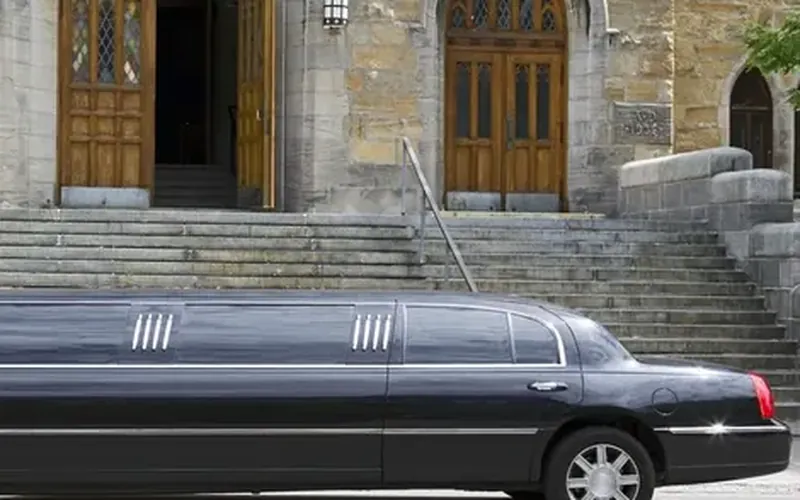
A funeral limo service is chauffeured transportation for the family and closest guests at a funeral, memorial or graveside service. Instead of several relatives driving separately between the church, the graveside and the reception, one or more cars keep everyone together and let the family focus on the service instead of parking and directions.
Most families arrange funeral transportation in Atlanta through the same kind of black car and chauffeur company they would use for an airport run or a wedding. You book a set number of vehicles, a pick-up time and a route, and a professional chauffeur handles the rest. This guide covers how many cars you may need, how timing works, what happens during a procession, and what to confirm before the day.
How Funeral Limo Service Works
Funeral limo service is chauffeured transportation arranged around a funeral schedule. You tell the provider the date, the pick-up locations, the service times at the church or chapel, the cemetery and any reception afterward. The provider assigns vehicles and chauffeurs and quotes a flat, itemized price for the time involved.
In practice, most families book this as an hourly chauffeur service rather than a single point-to-point trip. A funeral day often involves several stops and waiting periods, and hourly booking covers the whole sequence without re-booking between legs. If you have used a chauffeur service before, the process will feel familiar: you describe the plan, the company confirms vehicles and timing, and you get a written quote before you commit.
The vehicles are ordinary luxury cars and vans, not decorated or branded for the occasion. Sedans and SUVs are the most common choice for immediate family, and larger vans are used when extended family or out-of-town guests need to travel together.
One thing to settle early is who is coordinating. Often a sibling, an adult child or a close friend handles the booking so the closest family members are not making logistics calls in the days before the service.
Gather the schedule: service times, addresses for the church, cemetery and reception, and the funeral home's contact.
Estimate the group: count who needs a ride, including out-of-town relatives staying at a hotel.
Choose vehicles: sedans for small family groups, SUVs for families with more people, vans for larger parties.
Request a written quote: confirm the hours covered, the vehicles and what the price includes.
Share the plan: send the schedule and chauffeur details to the family member coordinating with the funeral home.
Choosing the Right Vehicles for the Family
The right vehicle depends on how many people are traveling together and how much the family wants to stay in one car. A luxury sedan seats up to three passengers and suits a couple or a small group of immediate family. An executive SUV seats up to six and is a common choice when adult children and a spouse want to ride together.
For larger families, a Mercedes Sprinter seats ten to fourteen passengers and keeps extended family in one vehicle. A mini bus shuttle handles twenty to thirty passengers and can move a large group from the service to the reception without a convoy of cars.
Seat counts are typical, not guaranteed, so the exact vehicle is confirmed on your quote. If some family members use wheelchairs or walkers, say so when you book. The provider can advise on vehicle access and loading, and the funeral home can usually coordinate with the cemetery on accessibility at the graveside.
It also helps to think about who should ride together. Some families keep the immediate family in one car and put extended family and friends in a second vehicle, which keeps the arrival calm and the seating predictable.
| Vehicle | Passengers | Good fit for |
|---|---|---|
| Luxury Sedan | Up to 3 | A couple or small group of immediate family |
| Executive SUV | Up to 6 | Adult children and a spouse riding together |
| Stretch Limousine | 8–10 | A family group that wants to arrive together |
| Mercedes Sprinter | 10–14 | Extended family and out-of-town guests |
| Mini Bus Shuttle | 20–30 | Large groups moving between service and reception |
Timing the Day Around the Service Schedule
Funeral timing is usually set by the funeral home, the church and the cemetery, and your transportation should fit around their schedule rather than the other way around. Share the full plan with your provider: when the family needs to arrive at the church, when the service ends, when the graveside begins and where the reception is.
Build in buffer. Families often need to arrive early for a viewing or to greet guests, and graveside services can run longer than expected. Tell the provider the earliest you might need the car and the latest you expect to finish, and ask how additional time is handled if the day runs long.
If out-of-town relatives are flying in, arrange their airport pickup separately or as part of the same booking. A car service from ATL Airport can bring family directly to a hotel or to the service, which removes one more thing for the local family to manage.
Confirm the day before. A short call to re-confirm pick-up times, addresses and the chauffeur's name prevents surprises on a morning when no one wants to troubleshoot.
How Funeral Processions Work
A funeral procession is a line of vehicles traveling together from the service to the cemetery, usually led by the hearse and followed by family cars. In Georgia, procession rules are set by state law and local practice, and the funeral home leading the procession will explain how it works for your service. Follow their instructions rather than assuming.
Your chauffeur's job is to stay in the procession and follow the funeral director's lead. Family members riding in the car do not need to manage directions or spacing. If the procession breaks up at a light or an intersection, the chauffeur will rejoin as directed.
Processions move slowly and can take longer than a normal drive. That is built into the hourly booking, but it is worth telling your provider that a procession is involved so they allow for it.
Rules about lights, right-of-way and intersection behavior vary and are enforced by local police. This is general information, not legal advice, so confirm current rules with the funeral home or local authorities.
What Funeral Transportation Usually Costs
Funeral transportation is priced per trip or per hour depending on how you book, and the total depends on several factors: the number and type of vehicles, the hours covered, the distance between the church, cemetery and reception, the date, and any minimum booking time the company applies.
Ask for one flat, itemized quote before you book. A clear quote lists the base rate, gratuity, tolls and any fees separately so you can see what you are paying for. If a company will only give a verbal estimate, ask for it in writing.
A few questions help you compare quotes fairly:
How many hours are included, and what happens if the service runs long? Is the gratuity included or added separately? Are there fees for early morning or weekend bookings? Does the quote cover all the stops on the day, or only the first leg?
If cost is a concern, ask whether fewer vehicles or a shorter hourly window would work for your group. Many families find that one sedan for immediate family plus one larger vehicle for everyone else is more economical than several separate cars. You can request a written quote for your specific schedule and compare it line by line.
Hours included: confirm the window and how overtime is billed.
Gratuity: ask whether it is built into the quote or added at the end.
Stops covered: make sure every leg of the day is included.
Vehicle type: confirm the exact car or van, not just a category.
Cancellation terms: understand the policy in case plans change.
Etiquette and Practical Details
Funeral etiquette varies by family, faith and region, so follow the lead of the funeral home and the family's wishes. In general, family members ride together, the procession follows the hearse and guests follow in their own cars or a shuttle.
A few practical details make the day smoother:
Dress and behavior in the car are usually the same as at the service. Keep conversation quiet and let the family set the tone.
Let the chauffeur know if anyone in the car has mobility needs so they can position the vehicle close to the entrance.
Keep phones on silent, and give the chauffeur the funeral director's phone number in case of a timing change.
If children are riding, plan for car seats. Georgia law requires appropriate child restraints, and providers can tell you what they can and cannot supply. This is general information, not legal advice; confirm current rules with the Georgia Department of Public Safety or a certified technician.
If the family is gathering at a home or hotel afterward, a black car service can handle the reception leg so no one has to drive after a long and emotional day.
Booking Funeral Transportation in Atlanta
Book as soon as service times are set. Funerals often come together in a few days, and vehicle availability tightens on short notice, especially on weekends. Call with the date, the schedule and the addresses, and ask what can be confirmed right away.
Be clear about the route. Atlanta traffic can stretch a short distance into a long drive, and a procession moves more slowly than normal traffic. Give approximate addresses for the church, cemetery and reception so the provider can plan realistic timing. If the service is in Downtown Atlanta or Buckhead, mention it so the chauffeur can plan around event traffic and parking.
Ask who to call on the day. You want a direct number for the dispatch team and, if possible, the chauffeur's name and vehicle description before the morning of the service.
Finally, confirm the day before and again a few hours ahead if anything changes. A short confirmation call is normal and welcome, and it gives you peace of mind on a difficult day.
Questions to Ask Before You Book
A short list of questions helps you choose a provider with confidence. Ask whether the company is licensed and insured, whether every booking includes a professional chauffeur, and whether the quote is flat and itemized.
Ask how the company handles changes. Funerals can shift if a viewing is added or a graveside is moved, and you want to know how rescheduling or added hours are billed.
Ask about the vehicles. Confirm the exact car or van, the passenger count and whether luggage or mobility equipment fits. If out-of-town family is arriving at Hartsfield-Jackson, ask whether airport pickups are tracked to the flight.
Ask for the quote in writing and read it before you sign. If something is unclear, ask for it in plain language. A good provider will walk you through the details without pressure.
Making the Day Easier for the Family
The goal of funeral limo service is simple: keep the family together and remove logistics from a day that is already hard. A professional chauffeur handles parking, directions and timing so the people closest to the deceased can focus on the service and on each other.
Small choices help. Pick one family member to coordinate with the provider. Keep the schedule in one place and share it with everyone riding. Confirm the day before. And give yourself room in the schedule so the day does not feel rushed.
If you are planning transportation for a funeral in metro Atlanta, start with the schedule and the group size, then request a written quote. You can compare options, confirm the vehicles and have one less thing to think about when the day arrives.
Frequently asked questions
How many cars do we need for a funeral?
It depends on how many people are riding together. One sedan usually covers a couple or a small group of immediate family, while an SUV or Sprinter is better for a larger family. Count who needs a ride, including out-of-town guests, and ask the provider to recommend vehicles for your group size.
Can we book funeral transportation on short notice?
Often yes, but availability tightens on short notice, especially on weekends. Call as soon as service times are set and ask what can be confirmed right away. Confirm the day before and again a few hours ahead if anything changes.
Does the chauffeur stay for the whole day?
Usually yes when you book hourly service. The chauffeur drives between the church, cemetery and reception and waits during the service. Confirm the hours included and how additional time is billed before you book.
How does the procession work?
The funeral home leads the procession, usually with the hearse first and family cars following. Your chauffeur stays in line and follows the funeral director's instructions. Rules about lights and right-of-way vary, so follow the funeral home's guidance and local law.
Can you pick up family from the airport?
Yes. Airport pickups can be added to the booking so out-of-town relatives are brought directly to a hotel or to the service. Airport pickups are tracked to the flight, and the chauffeur meets your family at the agreed location.
What should we tell the provider when booking?
Share the date, the service times, the addresses for the church, cemetery and reception, the number of people riding and any mobility needs. Mention if a procession is involved and ask for a flat, itemized quote in writing.
Is gratuity included in the quote?
Ask. A clear quote lists gratuity, tolls and fees separately so you can see what is included. If something is unclear, ask the provider to explain it in plain language before you book.