The Atlanta airport terminals are split into two separate complexes: the Domestic Terminal on the west side and the International Terminal on the east side. The confusing part is that a flight can be international and still leave from the domestic side, because several airlines sell international tickets but check passengers in at the Domestic Terminal.
This guide explains how the two sides are laid out, which airlines generally use which one, and how that changes your drop-off, your pickup after an international arrival and your connection between concourses. Airline assignments do shift, so treat the patterns here as a planning guide and confirm your terminal on the airport's website or with your airline before you travel.
How the Atlanta Airport Terminals Are Laid Out
ATL is built around two terminal buildings that sit on opposite sides of the airfield. The Domestic Terminal on the west side is the larger and busier of the two, and it is where most travelers start and end their trip. The International Terminal on the east side, sometimes called the Maynard H. Jackson Jr. International Terminal, handles international check-in and the airport's international arrivals hall.
Both terminals feed into the same seven concourses, T, A, B, C, D, E and F. Concourse T sits directly behind the Domestic Terminal, and Concourse F sits behind the International Terminal. Concourses A through E are in between. The Plane Train, an automated people mover that runs inside security, connects all of them, so once you clear security the two terminals are effectively one building.
Domestic Terminal (west): Check-in, security and baggage claim for Delta and most domestic airlines.
International Terminal (east): Check-in for most international carriers and the arrivals hall for international flights.
Concourse T: Steps from the Domestic Terminal and the first stop on the Plane Train.
Concourse F: Attached to the International Terminal and the last stop on the Plane Train.
Plane Train: Runs inside security between all concourses and both terminals, typically every couple of minutes.
Ground transportation: Separate roadways, curbs and parking decks on each side of the airport.
Why the airport has two terminals
The International Terminal opened to give international arrivals their own customs and baggage operation and to take pressure off the Domestic Terminal. That is why the two sides feel like different airports from the curb, even though they share the same runways, concourses and security system.
What stays the same on both sides
TSA screening, the Plane Train, concourse access and baggage handling all work the same way regardless of which terminal you enter. The real difference is which airline checks you in and where your flight's bags are claimed.
Which Airlines Use the Domestic Terminal
The Domestic Terminal is the check-in home for Delta Air Lines and most other domestic carriers serving ATL. Delta is by far the largest operator at the airport and runs its check-in operation on the west side, including for many of its international flights. If you are flying Delta to Cancun, London or anywhere else, you will usually check in at the Domestic Terminal and depart from a concourse reached by the Plane Train.
Other domestic airlines generally check in at the Domestic Terminal as well. That includes the large low-cost carriers and the legacy airlines that serve Atlanta alongside Delta. The Domestic Terminal is also where you will find the airport's main ground transportation curb, the MARTA station and the larger parking decks.
Because airline schedules and terminal assignments change, do not assume. Check the terminal printed on your itinerary or look it up on the airport's site the day before you fly.
Delta and its international flights
Delta's international departures mostly leave from Concourse E and F, but passengers still check in and clear security on the domestic side. If a driver drops you at the International Terminal for a Delta international flight, you will likely have to walk or ride around to the other side, so confirm before you book.
Domestic connections
If you are connecting in Atlanta, you usually stay inside security and ride the Plane Train between concourses. You only return to a terminal if you need to claim bags, re-check in or exit the airport.
Which Airlines Use the International Terminal
The International Terminal on the east side is the check-in point for most foreign-flag carriers and other airlines whose Atlanta service is primarily international. Airlines such as British Airways, Air France, KLM, Lufthansa, Turkish Airlines, Qatar Airways, Air Canada and Korean Air are typically associated with the international side. Smaller international and charter operators also use it.
The International Terminal is also where international arrivals are processed. Passengers land, clear customs and immigration, collect bags and exit through the arrivals hall on the east side. That hall is a separate building from the Domestic Terminal's baggage claim, which matters a great deal if someone is picking you up.
Some international flights depart from concourses reachable only through the Domestic side's security checkpoints. In those cases the airline will usually tell you which terminal to use for check-in, so follow the airline's instructions rather than the destination on your ticket.
International arrivals and the pickup curb
After clearing customs, you exit the International Terminal onto its own curb. A driver waiting at the Domestic Terminal will not be able to meet you there, and the two sides are not a short walk apart. Confirm the arrivals terminal with your car service so the pickup is in the right place. For a chauffeured arrival, a car service from Atlanta airport can track your flight and meet you at the correct curb.
Airlines that split their operation
A few carriers sell both domestic and international tickets and may check in on different sides depending on the route. Always match your flight number to the terminal rather than the airline name alone.
Domestic and International Terminal Comparison
The table below summarizes the practical differences between the two sides. Use it to decide where to be dropped off and where to meet your ride, not as a substitute for confirming your airline's current assignment.
If you fly Delta: Plan on the Domestic Terminal unless your itinerary says otherwise.
If you fly a foreign carrier: Plan on the International Terminal for check-in.
If you are arriving from abroad: Expect to exit on the east side after customs.
If you are connecting: Stay inside security and use the Plane Train.
| Feature | Domestic Terminal (west) | International Terminal (east) |
|---|---|---|
| Main users | Delta and most domestic airlines | Most foreign-flag and international carriers |
| Check-in | Domestic and many Delta international flights | International flights for carriers based here |
| Baggage claim | Domestic arrivals | International arrivals after customs |
| Closest concourse | Concourse T | Concourse F |
| Plane Train access | Yes, inside security | Yes, inside security |
| Ground transportation | Large curb, MARTA station, main parking decks | Separate curb and parking on the east side |
| Typical use | Most Atlanta-origin travelers | International departures and arrivals |
Getting Between the Two Terminals
The terminals are connected airside by the Plane Train, which runs inside security and stops at every concourse plus both terminals. If you are already through security, moving from Concourse T to Concourse F takes only a few minutes on the train plus walking time. That is how most connecting passengers experience the airport.
Landside is a different story. Outside security, there is no simple indoor walk between the two terminal buildings. You either take the airport's inter-terminal shuttle bus, which runs on the roadway system, or you drive around. The shuttle is free and runs regularly, but it adds real time, especially during busy periods.
If you are being dropped off or picked up, the safest plan is to know your terminal before you leave home. A driver who drops you at the wrong side cannot simply pull around quickly; the two sides sit at opposite ends of the airport complex.
Connecting through Atlanta
For a domestic-to-international connection, you usually stay inside security and ride the Plane Train to Concourse E or F. For an international-to-domestic connection, you clear customs, re-check bags if required and re-clear security before heading to your next concourse. Build in extra time for that process.
When to use the shuttle
Use the inter-terminal shuttle if you need to reach the other terminal outside security, for example to meet someone or to reach a rental car desk on the opposite side. Allow extra time during peak travel periods.
Drop-Off and Pickup: Why the Terminal Matters
The single most common ground transportation mistake at ATL is meeting at the wrong terminal. Each side has its own roadway, its own curb zones and its own parking. If your driver is at the Domestic Terminal and you exit the International Terminal, you are a shuttle ride apart.
For departures, tell your driver your airline and flight number, not just "the airport." A professional chauffeur will know which side to use, but the information has to come from you. For a scheduled departure, a car service to Atlanta airport confirms the terminal and drop-off zone on the quote so there is no guesswork on the morning of the flight.
For arrivals, the terminal on your ticket is the one you exit from. International arrivals come out on the east side after customs, and the timing depends on passport control and baggage, which can vary widely. Flight tracking helps a chauffeur adjust to a delayed landing or a long customs line.
Share your airline and flight number: This is more useful than the destination city.
Confirm the terminal on your itinerary: Check it the day before you fly.
Expect customs delays on international arrivals: Build a buffer into pickup plans.
Know your curb zone: Both terminals have numbered zones along the roadway.
Book the right vehicle: Luggage-heavy international trips often suit an SUV or Sprinter.
Choosing a Vehicle for Each Terminal
The terminal affects your vehicle choice more than you might expect. International trips usually mean more luggage and longer trips to the curb, and international arrivals can involve a wait while bags come off the carousel. A vehicle with room for bags and a chauffeur who can wait makes the arrival smoother.
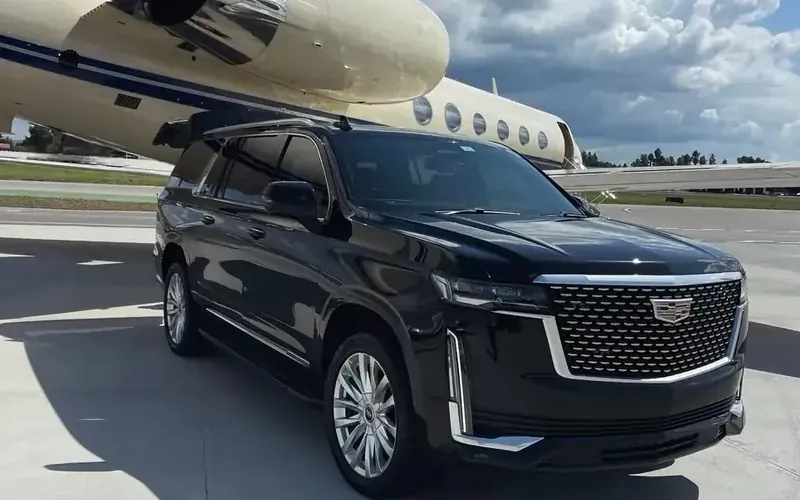
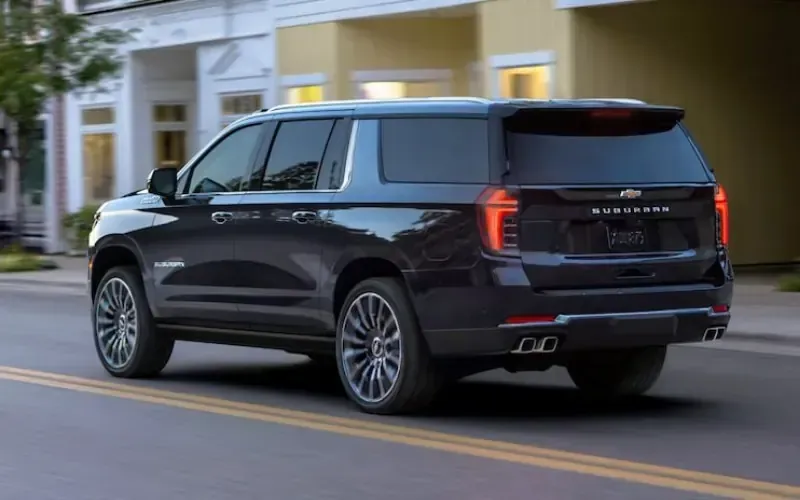
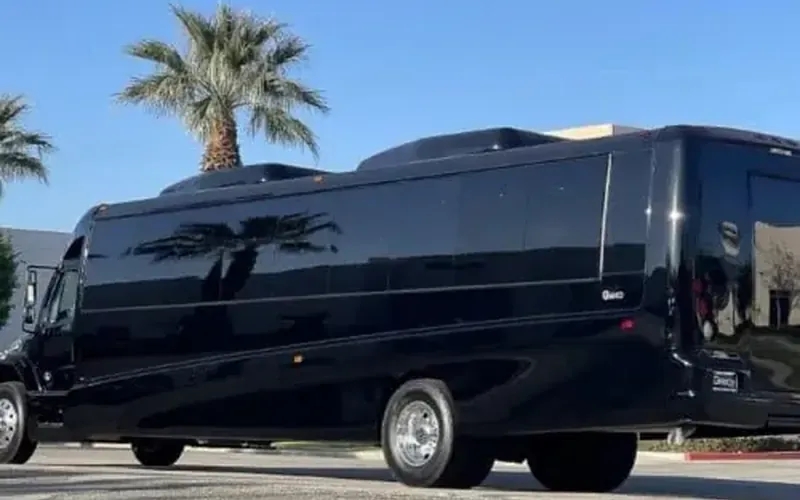
For a solo business traveler or a couple, a luxury sedan handles most airport runs comfortably. Families with several checked bags usually do better in an executive SUV. Groups arriving together, such as a team or a family reunion, often book a Mercedes Sprinter so everyone travels in one vehicle.
If you are coordinating a group arriving on the same international flight, a larger vehicle keeps the party together through customs and out to the curb. A group transportation booking can also handle multiple pickup times if your party lands on different flights.
Luggage realities
International travelers often check more and larger bags than domestic travelers. Mention bag counts when you book so the right vehicle is assigned, and remember that seat counts are typical rather than guaranteed until the quote confirms the exact vehicle.
Business travel through ATL
Atlanta is a major corporate hub, and many business trips start at the Domestic Terminal. A corporate transportation account with a flat, itemized quote keeps airport runs predictable and avoids expense-report surprises.
Private Airports and the Atlanta Terminal Question
Not every flight into Atlanta lands at Hartsfield-Jackson. The metro has a ring of general aviation and private airports, and each has its own terminal building and curb. If your trip is on a private or charter aircraft, the domestic-versus-international question does not apply, but the pickup logistics still do.
DeKalb-Peachtree Airport (PDK) northeast of the city is the busiest of the reliever fields. Fulton County Executive Airport at Brown Field (FTY) sits on the southwest side, Gwinnett County's Briscoe Field (LZU) serves the northeast suburbs, Cobb County International at McCollum Field (RYY) serves the northwest, and Atlanta Regional at Falcon Field (FFC) handles Peachtree City and the south side.
Each of these fields has a small terminal or FBO building where your flight arrives. A chauffeur can meet you at the door rather than at a public curb. If you are flying private into one of them, arrange the pickup in advance and share the tail number or flight details so the driver can track the arrival.
PDK: DeKalb-Peachtree Airport, northeast of downtown.
FTY: Fulton County Executive Airport at Brown Field, southwest Atlanta.
LZU: Gwinnett County Airport at Briscoe Field, northeast metro.
RYY: Cobb County International at McCollum Field, northwest metro.
FFC: Atlanta Regional Airport at Falcon Field, near Peachtree City.
Planning Your Trip Around the Right Terminal
A little planning goes a long way at an airport this size. The night before you fly, check your itinerary for the terminal, confirm your airline's check-in location and decide how you are getting to the curb. On arrival day, check the flight status and, for international flights, expect customs to add time.
Security lines differ by terminal and by time of day, so arriving early matters more than which side you use. Both terminals have TSA checkpoints, and both feed the same concourse system. Once you are through, the Plane Train makes the rest of the airport easy to navigate.
If you are booking a ride, give yourself a buffer and share your flight details. A flat, itemized quote before you book tells you what the trip costs, with gratuity, tolls and fees listed separately, so there are no surprises at the curb. Confirm current terminal assignments, security wait times and pickup rules on the airport's official website before you travel.
A simple pre-flight checklist
Confirm the terminal, confirm the airline, confirm the flight number and confirm the pickup time. Those four items prevent almost every terminal mix-up.
When plans change
Airlines occasionally move a flight to a different terminal or concourse. If your itinerary changes, update your car service with the new details so the driver goes to the right side of the airport.
Frequently asked questions
Does Atlanta have separate domestic and international terminals?
Yes. Hartsfield-Jackson has a Domestic Terminal on the west side and an International Terminal on the east side. Both connect to the same concourses through the Plane Train inside security, but they have separate check-in areas, baggage claims and ground transportation curbs.
Which terminal is Delta at in Atlanta?
Delta checks in at the Domestic Terminal, including for many of its international flights. Delta's international departures typically leave from Concourse E or F, which you reach by the Plane Train after clearing security. Confirm the terminal on your itinerary before you travel.
Can I walk between the domestic and international terminals at ATL?
Not directly outside security. The two terminal buildings sit on opposite sides of the airport. Inside security, the Plane Train connects them in minutes. Outside security, you use the airport's inter-terminal shuttle bus or drive around, which takes noticeably longer.
Where do international arrivals come out at ATL?
International passengers clear customs and immigration and exit through the International Terminal arrivals hall on the east side of the airport. That is where your pickup should be, not the Domestic Terminal curb. Allow extra time for passport control and baggage.
How do I know which terminal my flight uses?
Check the terminal printed on your itinerary or look it up on the airport's official website or your airline's app. Match the terminal to your flight number rather than the airline name, since some carriers use both sides depending on the route.
How long does it take to get between concourses at ATL?
The Plane Train runs frequently and connects all concourses and both terminals. Most transfers take only a few minutes on the train plus walking time. Allow extra time during peak periods and when you are connecting from an international arrival.
Should I book a car service for an international arrival?
A chauffeured car is a practical choice for international arrivals because the driver can track your flight, adjust to customs delays and meet you at the correct curb. Share your flight number and terminal when you book so the pickup is in the right place.